

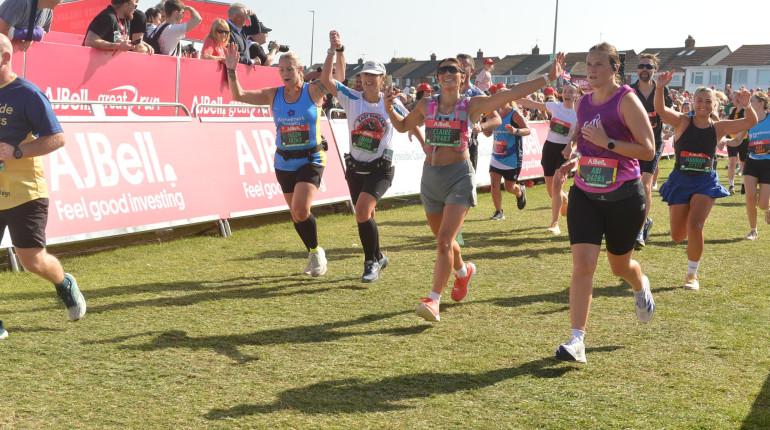
Last Sunday I ran the Great North Run. Whatever your time, whatever your training looked like, 13.1 miles is a genuine achievement and your body has just done something remarkable - I need to keep reminding myself that mine certainly has. But the work isn't over yet. What you do in the days after a half marathon (or any strenuous exercise) has a real impact on how quickly you recover, how you feel next week, and how ready you'll be for whatever comes next. This isn't about pushing through soreness or "bouncing back" fast — it's about giving your body what it actually needs to repair well.
What the research actually says
Recovery after endurance events like a half marathon involves three overlapping processes: replenishing energy stores, repairing muscle tissue, and calming the inflammatory response that intense exercise triggers. Research suggests that eating carbohydrate and protein together within a couple of hours of finishing supports glycogen replenishment and muscle repair more effectively than either alone. Studies also indicate that some gentle movement in the days after an event, rather than complete rest, helps reduce stiffness and supports circulation, which many people find eases the worst of the post-race soreness (also known as DOMS, delayed onset muscle soreness) that tends to peak around 24–72 hours later.
What this looks like in practice
Eating well
In the first couple of hours after finishing, aim for a mix of carbohydrates and protein — think a sandwich, a smoothie with fruit and yoghurt, or beans on toast. If you’re like me, you might not really feel like eating at all, so choose something that satisfies your appetite in terms of it being what you fancy is a good start (for me that was fish and chips with plenty of salt and vinegar, and curry sauce). Over the following days, protein at each meal (eggs, fish, chicken, tofu, lentils), plenty of whole grains and vegetables, and consistent hydration all support the process. Alcohol is known to be detrimental to rehydration and sleep quality, so it's worth going easy for a day or two.
Movement that helps
Complete rest isn't usually the best approach. A short, easy walk the day after, even just 15–20 minutes, can help ease stiffness without adding further strain. If you're anything like me, the legs feel stiffest the morning after, not the day of the run. Beyond walking, a few gentle, low-impact Pilates moves can be genuinely soothing for tired running muscles:
Shell Stretch - releases the lower back and hips, which take a real pounding over 13.1 miles
Cat Stretch - gentle spinal mobility, good for the stiffness that settles in after long periods of forward motion
Roll Down - eases tight hamstrings and calves while encouraging slow, controlled spinal movement
Mermaid - opens the side body, which can feel tight from hours of repetitive stride pattern
Seated twist - great for easing the obliques after all that anti-rotation, and mobilising a stiff upper spine
None of these should be pushed into discomfort — the aim is gentle, easy range of movement, not a workout. Let comfort be your guide rather than pushing into anything that hurts.
Rest and sleep
Sleep is when a lot of the real repair work happens. Prioritising a good night's sleep in the days after your race matters as much as anything you eat. If you're more tired than usual, that's your body telling you something useful - listen to it rather than pushing through.
Common questions, answered
Should I run again straight away?
Not yet. Most guidance suggests easing back in gradually over 1–2 weeks, starting with walking or very light movement before any running resumes, and building up from there based on how you feel.
Is it normal to feel low or flat a few days later?
Yes, this is common after a big event — sometimes called a post-race slump. It usually passes. Gentle movement, good food, and being kind to yourself all help.
What if I'm more sore than expected?
Some muscle soreness is completely normal. But if you notice sharp, localised pain, swelling, or pain that's getting worse rather than better, that's worth checking with a GP or physio rather than working through it.
How to get started
You don't need a complicated plan. In the first 24–48 hours: eat well, hydrate, rest, and move gently if it feels good to - a short walk, or a few minutes of Shell Stretch and Cat Stretch on the floor at home. That's exactly what I'll be doing this week. From there, let your body's signals guide the pace of your return — fatigue is fine, pain is a signal, and it's always worth listening to it.
One final thing
Finishing a half marathon is no small thing, and how you treat your body afterwards matters just as much as the training that got you there. Be patient with yourself, feed your body well, and let gentle movement do some of the work.

